How The 1975 Changed My Relationship with Art

Part One: Documenting The Time, and A Brief Inquiry Into Online Relationships
As a member of Gen Z, I grew up in a time when art and the internet were beginning to form their own intersection, and the line between traditional art forms and what was quickly becoming termed as ‘content’ was growing blurry. My early childhood consisted more of music out loud and family trips to the cinema while my pre-teens bore witness to the rapid emergence of the internet’s monopoly on entertainment. At the ages of twelve and thirteen, my relationship with art was diminishing before it had even started. Titillated by the unlimited online sphere, my time and attention were spent watching pranks and tutorials on YouTube rather than engaging with music, films, or novels, let alone becoming inspired to create anything myself. So while Paul Simon’s Graceland blessed the walls of our kitchen, I sat alone in my bedroom with my headphones on and unknowingly let the dopamine burnout begin.
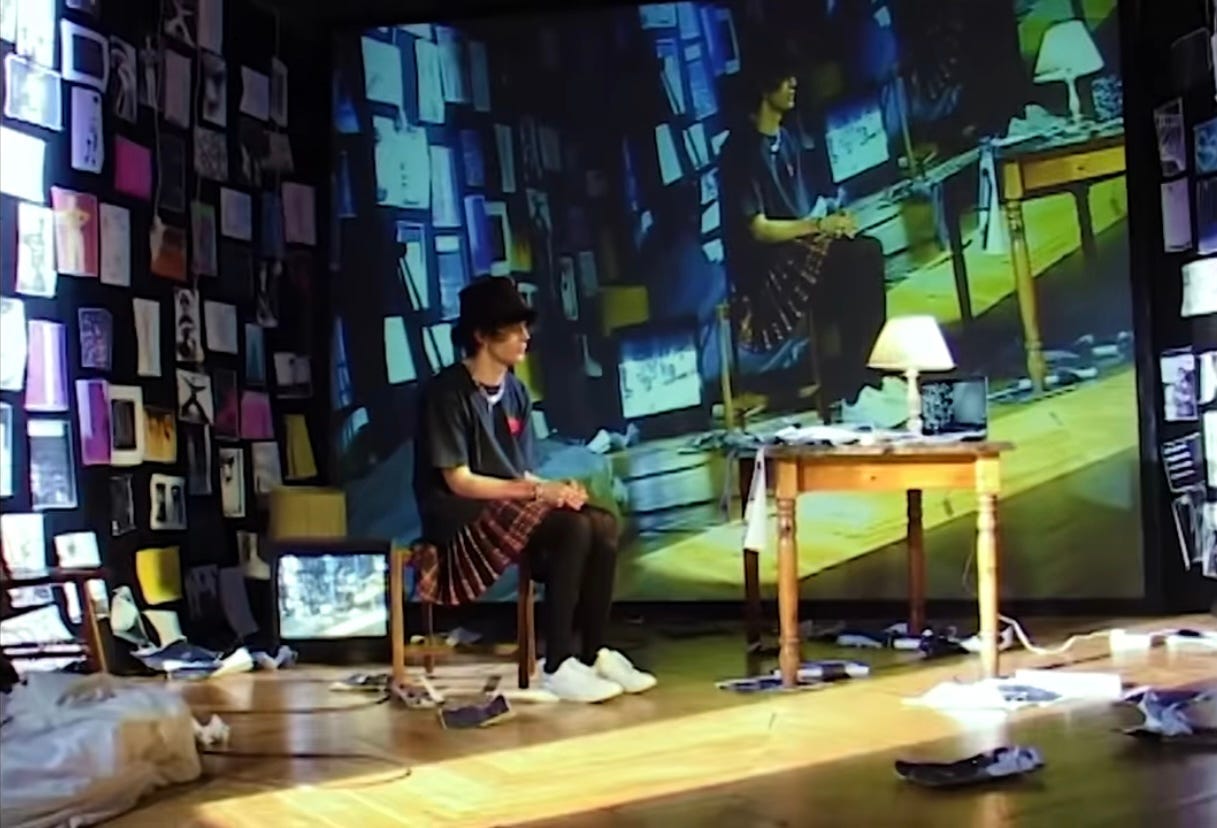
As this is my only lived experience, I am not sure at what age art is supposed to start having an impact on one’s sense of identity and outward view of the world, but I can say that for me it was only around the age of seventeen that I began to consider art as something more than just another form of entertainment. Perhaps it had something to do with the commencement of a personal crisis and decline in health, or maybe it was a product of post-covid boredom, or maybe the development of my frontal lobe and entry into a higher level of education and critical thinking was to thank. More likely, it was a combination of all these things and more. But whether by coincidence or fate, it was also around this time that I discovered, or rather re-discovered, a band known as The 1975.
My interest was piqued in the early autumn of 2022 when I stumbled across a video of The 1975 performing at Reading and Leeds Festival that summer, and the release of Being Funny in a Foreign Language a few weeks later catapulted me into full-fledged fandom. At first, it was simply the peripheral joy of the music itself that captured my attention, but upon a further dive into their discography and history, I realised there was more to their magnetic appeal than just good music. The 1975 inspired my interest in art as something more than simply passive entertainment; they opened my eyes to how art can and should speak to a generation by documenting the here and now, acting as a language through which we can comprehend our individual and collective experiences at any given point in history.
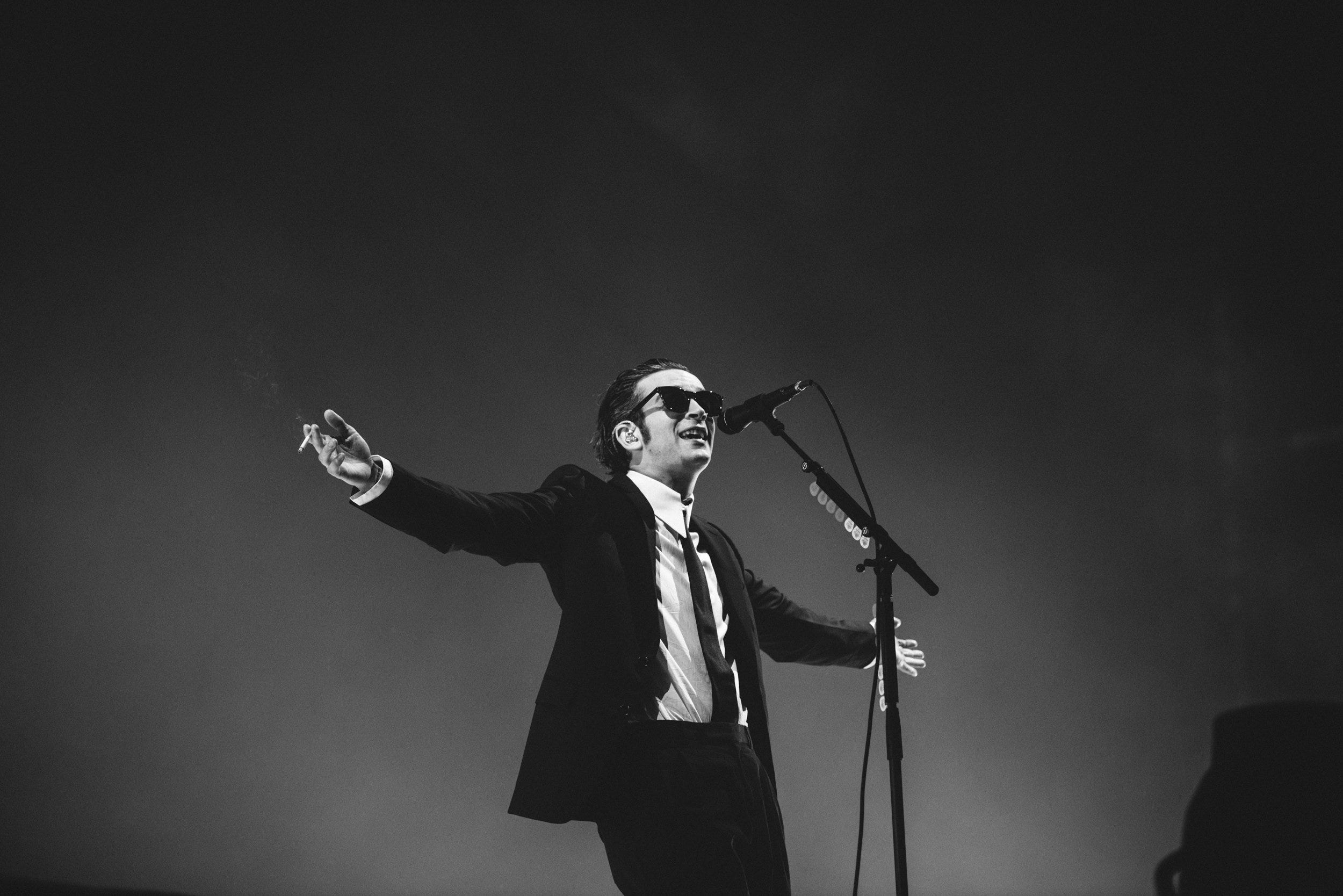
In his conversation with Joshua Citarella on Doomscroll in 2024, Matty Healy, frontman of The 1975, stated that the majority of his work has revolved around the central question of ‘How are we and why are we communicating in the ways that we do, and what are its impacts?’. The release of the band’s sophomore album in 2016, I Like It When You Sleep For You Are So Beautiful Yet So Unaware Of It, noted the beginnings of their expressed fascination with online culture and how our relationships are now mediated by and intrinsically linked to the internet. Through the traditional artistic means of drawing on personal experience, Healy pens stories from his own relationships with acute observations on how the effects of modern technology manifest in various pockets of reality. Perhaps most famously, the lines “You said I’m full of diseases / Your eyes were full of regret / And then you took a picture of your salad and put it on the internet” sardonically capture the slightly dystopian feeling of having an earnest conversation with a loved one while they curate their social media persona in the same breath.
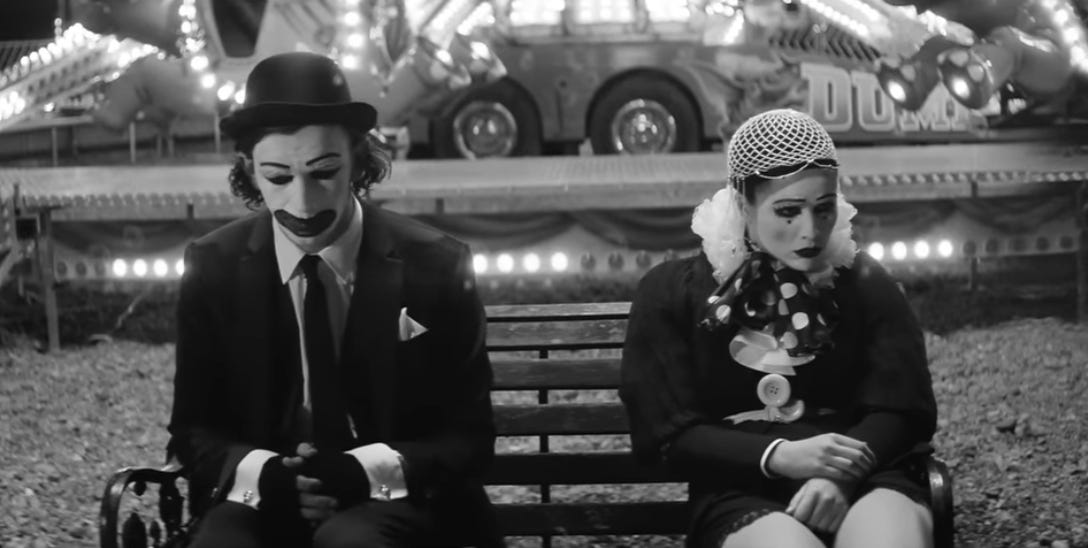
This theme carries through the rest of the band’s work, and pinnacles in their third and most critically acclaimed album, A Brief Inquiry Into Online Relationships. It is within this album that The 1975 perhaps most poignantly encapsulate the themes that underpin their career and those that underpin the dichotomic experiences of young adults in the 21st century. Balancing irony and sincerity, wrestling enforced individualisation with the desire for human connection, and ricocheting between introspection and existential dread, the record serves as a mirror into which listeners can peer to see their own feelings reflected back at them. In my opinion, this is what the best kind of art does.
Irony vs Sincerity
‘What passes as cynical transcendence of sentiment is really some kind of fear of being really human, as to be really human is probably to be unavoidably sentimental and naïve and goo-prone and generally pathetic’. This is a David Foster Wallace quote to which Matty Healy appended his own musings on why “Sincerity is Scary” in a 2020 interview with Pitchfork. The title of the fourth single from A Brief Inquiry summarises the notion that human beings often evade earnestness due to a fear of their own innate humanness. We fear being open and genuine because it makes us vulnerable. Instead, we gravitate towards irony, sarcasm, wit, and satire, because these things are easier to digest and navigate than the fragility of being a human being. Healy’s own writing style has often favoured a sardonic attitude over true earnestness, with tongue-in-cheek lyrics such as ‘Hey kids, we’re all just the same / What a shame’ epitomising our post-modern tendencies to subvert sentiment with cynicism.
However, in A Brief Inquiry, the pendulum seems to swing back at himself as he refutes his own nihilism (‘You lack substance when you say / Something like “Oh what a shame”’) and navigates real sincerity in songs such as “Inside Your Mind”, during which all pretence is dropped, and raw emotion is exposed. In following projects, particularly in their 2022 release Being Funny In A Foreign Language, this tendency towards irony seems to sort of collapse in on itself as Healy’s thirties make way for ‘different, less sexy ideas’. Songs such as “I’m In Love with You”, “When We Are Together”, and “All I Need to Hear” give credit to emotional vulnerability and outnumber the dick jokes that feature heavily on preceding albums. Perhaps ‘being funny’ in the language of post-internet irony has its limited shelf life, and ultimately truth and sincerity prevail.
Individualism and Technology
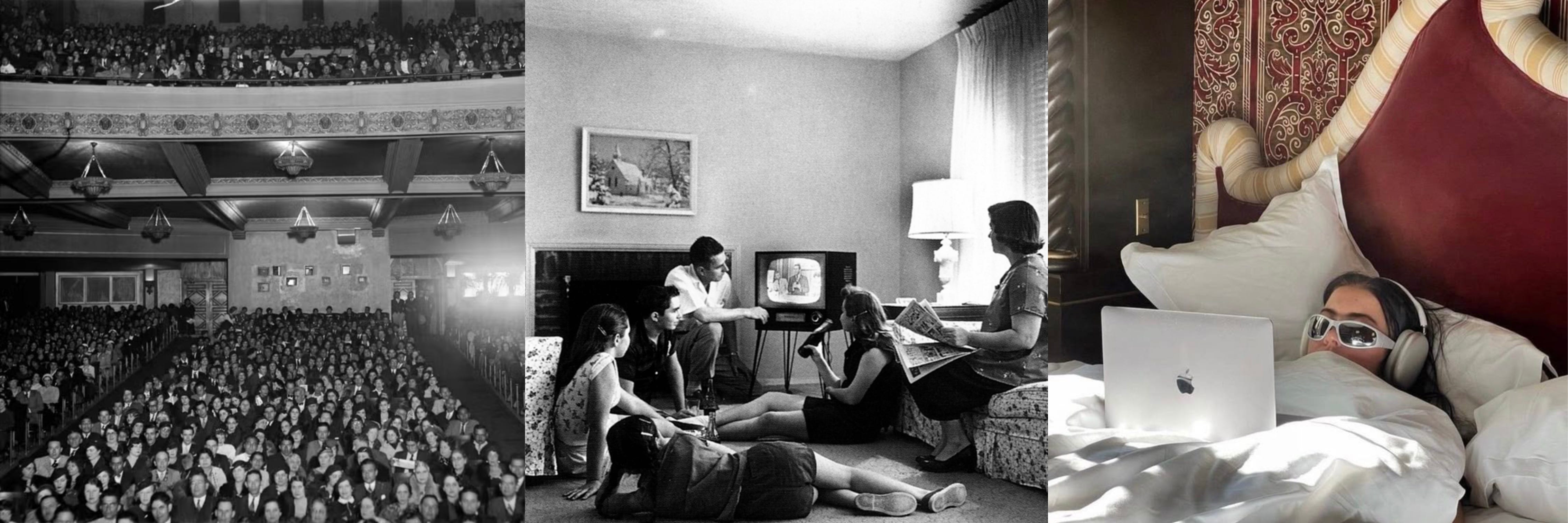
As technology has advanced, the environment in which we interact with it has changed, with the increased mobilisation of devices promoting increased singularity in their usage. The innovation of film prompted the creation of cinemas, to which communities of people would flock to attend a new release. The domestication of screens via television meant families did not have to leave their homes to enjoy a film or TV show, but they were at least still together, gathered in a communal space for a shared reason. Now we consume entertainment on an individual scale – on our laptops or phones, alone in our bedrooms. The closing circle of social engagement in the context of media and entertainment consumption has bred a sweeping sensation of loneliness that is perhaps unique to the 21st century.
But the desire for human connection is innate, and this internal conflict feels ingrained in the emotional experiences of the generations who have grown up in the internet’s destructive wake. “The Man Who Married A Robot/ Love Theme” is an experimental ambient track on the band’s third album that features an electronically generated voice narrating a story of friendship between ‘the man’ and ‘the internet’. It begins almost like a children’s book with the lines ‘This is a story about a lonely, lonely man/ He lived in a lonely house, on a lonely street/ In a lonely part of the world/ But, of course, he had the internet’.
The track explicitly illustrates a narrative that has been a prevalent subject of discourse in popular and wider culture throughout the 21st century. We have been made more and more ‘lonely’ by our own naïve ambition to expand human connection beyond the boundaries of tactile reality. Now, with the rapid emergence of AI in almost every facet of online activity, this discourse and the art that seeks to shed light on it feels more important than ever.
Introspection vs Extrospection
Perhaps one of the most conflicting dichotomies in the hearts and minds of young people raised on the internet is that between their personal problems and the ones which pose impending global doom. Existential dread is drip fed to us by our algorithms and wreaks havoc on our mental and emotional health. But while the world is ending, our boyfriend is cheating on us, our friendship group is crumbling, our parents are ill, or we’re trying to figure out which career path to choose.
The polarity of our anxieties is perhaps best epitomised on this album by the intimate confessions of “Be My Mistake” immediately following “Love It If We Made It”, a vehement political anthem listing off a multitude of the world’s sins circa 2018, and lamenting how ‘Modernity has failed us’. By whiplashing between these two extremes in immediate succession, The 1975 reflect back to us our own exhausting internal monologue that is born from both human nature and the unnatural overconsumption of information.
Part Two: Learning the Value of Unfamiliarity
‘Your favourite album will probably be an album that you hate the first time you hear it’, Matty Healy states in his interview with Doomscroll (2024). Six years on from when I first encountered A Brief Inquiry into Online Relationships and I know that, for me, this statement could not be more true.
My first conscious encounter with The 1975 was, fittingly, through the recommendation of an online friend. I was fourteen and had connected with a girl a year older than me who had a multi-fan account and was an avid ‘75 fan. At the time, pre-covid and on the precipice of those vital teenage years when establishing a sense of identity feels imperative, I was a very casual enjoyer of music. My Spotify playlists consisted of remnants of my parents’ eclectic tastes that had soundtracked my upbringing, and whatever was topping the charts in 2019. Basically, I had little to no authority over my own taste, and I was eager to make my own discoveries.
The way in which we discover new music is obviously vastly different since the dawn of the internet and the monopolisation of streaming services. As a child we would play CD’s in the car, but it’s difficult for me to vividly remember a time before iTunes, and impossible now for the generation below me. By the time I entered my teens I had my own mobile phone and access to the unlimited landscape of online music. While at the time this was nothing other than the norm, in retrospect I believe that such easy access to such sheer abundance was too daunting for the process of music discovery to actually be enjoyable – a concerning idea when considering how the tastes of young people are often what define movements in popular culture. If we are too overwhelmed to be interested in actively searching for art that resonates, and instead continuously fall back to the comfortability of what we already know or think we like, then how can originality ever prevail?
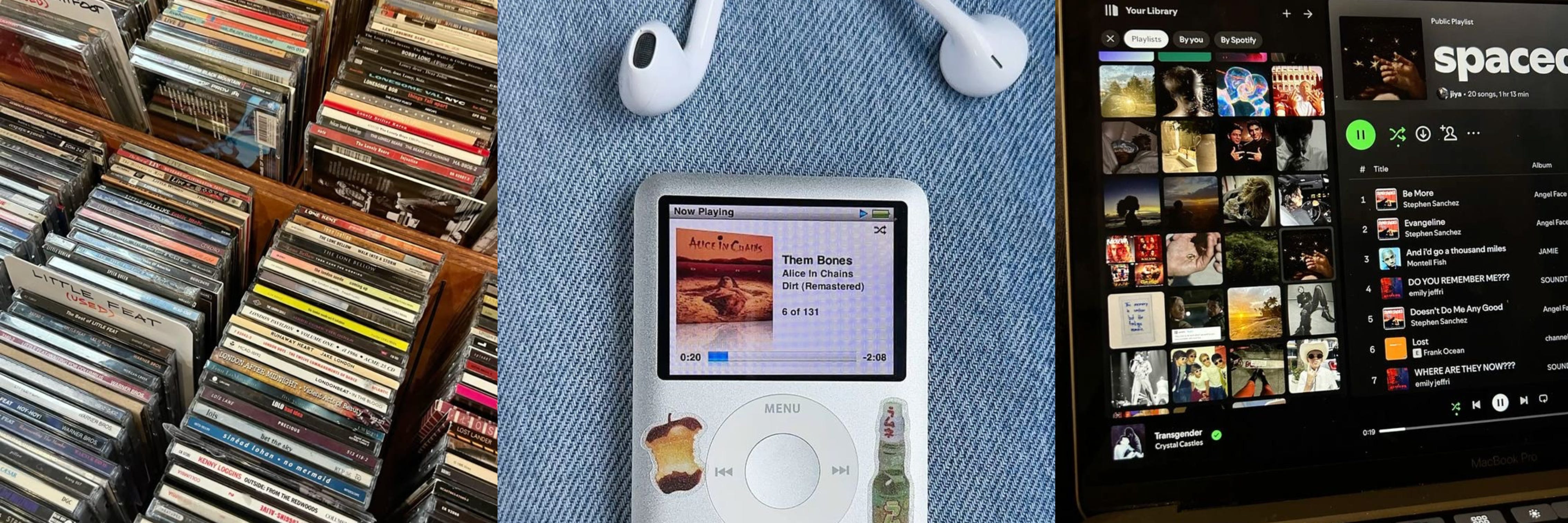
Social media platforms have provided spaces for creators and consumers to interact on a more intimate, albeit virtual, playing field, and with this comes a more acute awareness of what people are listening to. Data such as numbers of streams or videos posted to a certain sound explicitly indicate what consumers are listening to, and therefore apparently what they want to hear. In this way, new and emerging artists, or perhaps more so their managers and label executives, are able to see what is supposedly in demand and therefore what kind of music should be created in order to make the most money. This trend lends itself to the kind of regurgitation of old sounds and ideas that seems to underpin much of the 21st century pop music landscape. Healy references cultural theorist Mark Fisher in his conversation with Joshua Citarella when discussing how ‘the 21st century is defined by its inability to articulate itself.’ Granted, all art is born from inspiration from preceding artists, but with culture becoming overly aware of itself since the advent of the internet, it seems that inspiration has bled into derivation.
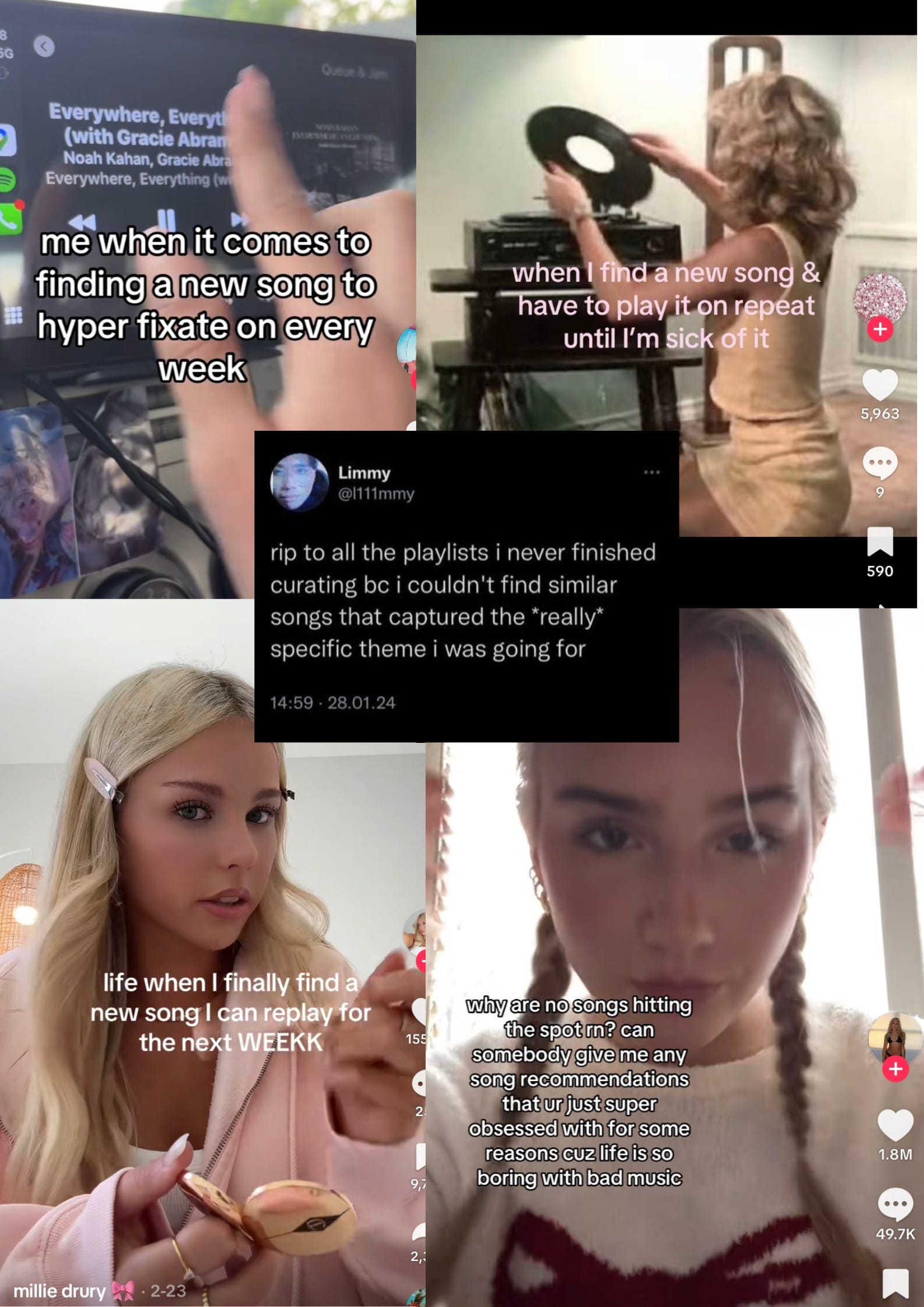
Moreover, what is not being conveyed through this data is a disturbing sense of inertia and fatigue amongst young listeners. Often, I have come across videos and posts of people expressing their frustration at not being able to find songs that sound exactly like the one they are currently obsessed with. As a result, said song is played on a constant loop and very quickly burns through its appeal. Simultaneously, the desire for newness is squashed by the sheer overwhelm of having essentially every song that has ever been made at your fingertips.
Unlike walking into a record shop and flicking through physical albums that have been categorised into genre, it’s hard to know where to even start when seeking new music online. So often we simply don’t bother. We listen to the same songs over and over again or we listen to nothing at all. To those analysing the data, this looks like ‘young people want x, so let’s give them x’, but what we really want is space to discover and engage with new music; to find sounds that we can claim as the product of our own generation as opposed to the regurgitation of the past. We are starved of originality and culture is stagnating as a result.
But at age fourteen I was oblivious to this. All I knew, or rather felt, was the universal teenage desire to find a foothold on the crumbling cliff of my own identity, and in the tradition of human nature, I turned to music. On the recommendation of my online friend, I listened to The 1975’s A Brief Inquiry Into Online Relationships, their most recent project at the time. For the first time probably in my life, I made the decision to sit down and listen to an album in its entirety. Something urged me to recognise this as a piece of art and deserving of consideration, not just passive consumption - a concept of relative newness to me.
With my headphones on and sitting on the floor of my bedroom, I pressed play. Two songs in and I pressed pause. What the hell was this? Whether it was unfamiliarity with ambiguous genres, or a genuine misalignment with my taste at the time, I did not like what I heard. It confused me. I didn’t understand it. I felt I couldn’t easily digest it, so I disregarded it. I returned to comfortability and to the playlists of songs I knew would provide easy background music to my journey to school or cleaning my room.
When I look back now at how I interacted with music at that age I can see how definitively the internet had an impact. While I had the entire history of music at my fingertips, I didn’t actually feel free to explore that world. If anything I was confined by the walls of familiarity that felt like protection from the immobilising vastness of information. It makes me sad to even refer to music as ‘information’, but in all honesty this is often how it can feel. Within discussions about the internet and modern technology, we often talk about how we consume content, whether it be watching videos on YouTube, reading essays on Substack, or streaming music on Spotify. In his Doomscroll interview, Healy talks about one of the dangers of mobile phones being that all information is conveyed to us ‘with the same tenacity’. For example, ‘a text message from your mum’ holds the same weight as ‘somebody that you’ve never met in your life liking a photo you made three weeks ago’.
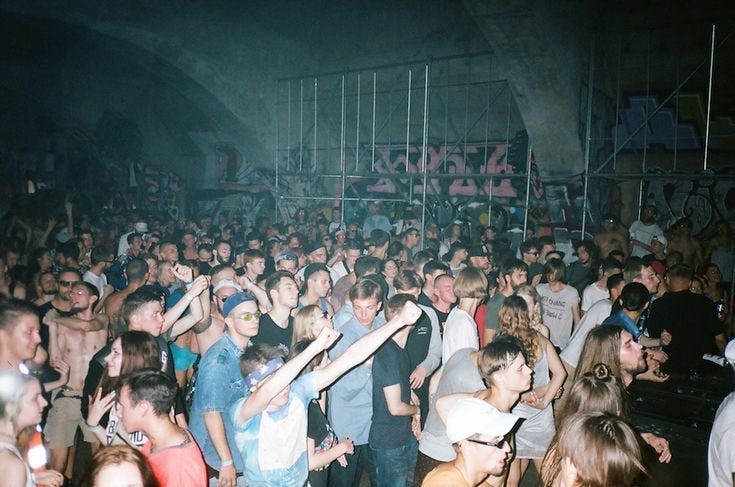
I think the same idea can be applied to the content we consume – the flatness of the smart phone’s interface means that pressing play on a song (or perhaps more poignantly, pressing skip) is no more or less meaningful than swiping through someone’s Instagram account. Comparatively, before the dawn of smart phones and online streaming platforms, music fans would engage with the form through physical copies on CD and vinyl, and would make discoveries in physical, more communal environments by attending clubs, gigs, local festivals, and open mics, all of which are far more conducive to substantial engagement with music. At the mercy of the band or the DJ or the needle of a record player, listeners are forced to pay attention and ‘skip’ is not an option. It seems as though the loss of tactility and community has helped engender a loss of meaningful engagement with art.
Now, despite the online music world being more or less the same as it was six years ago, I try harder to engage with music in a more deliberate and less mindless way. After re-discovering The 1975 at seventeen (the perfect age at which to become a fan of theirs, by the way), I went on a deep-dive into their catalogue and fell in love with the uniqueness of their sound, the humour in their writing and the pertinence of their inquiries. Speaking of which, my familiarisation with their discography led me back to A Brief Inquiry Into Online Relationships, and it quickly became my favourite album.
I learned that taste evolves with the individual but only if you allow yourself to be open to trying. Negating new sounds, ideas, or artistic approaches through the safety net of familiarity is dangerous not only to your personal development but to that of culture more widely too. When a friend recommends a song, film, or book, I take the recommendation seriously and promise to genuinely consider it. It’s ok if I don’t like it and it’s not a waste of time. When I find something I love, I also practise moderation and refrain from overconsumption to the point of intolerance, instead balancing my newfound passion with old favourites, other new discoveries, and silence. Art is to be enjoyed, absorbed, and experienced. It was never meant to be consumed.
Which leads me to my final point.
Part Three: The Experience vs the Consumption of Art
A couple of days after watching The 1975 headline Glastonbury from my sofa at home, I wrote this in my diary:
I miss my life. I miss human beings. I miss being in the presence of art that touches the soul.
Granted, this comes across as rather overly sentimental, but if you can’t be so in your own diary then where can you? What I was expressing, though, was a deep frustration and sadness at the isolation caused by my own current health issues and the fear of never experiencing those unparalleled feelings of joy and freedom that live music evokes. Watching 80,000 people jump in unison to the ecstatic bridge of “The Sound”, and chant the iconic four notes of “Robbers”, conjured not-too-distant memories of the last time I saw my favourite band live, and the sense of liberation I had experienced in those two blissful hours. It’s difficult to recall a time before or since that has made me feel anything close. And therein lies the power of live music.
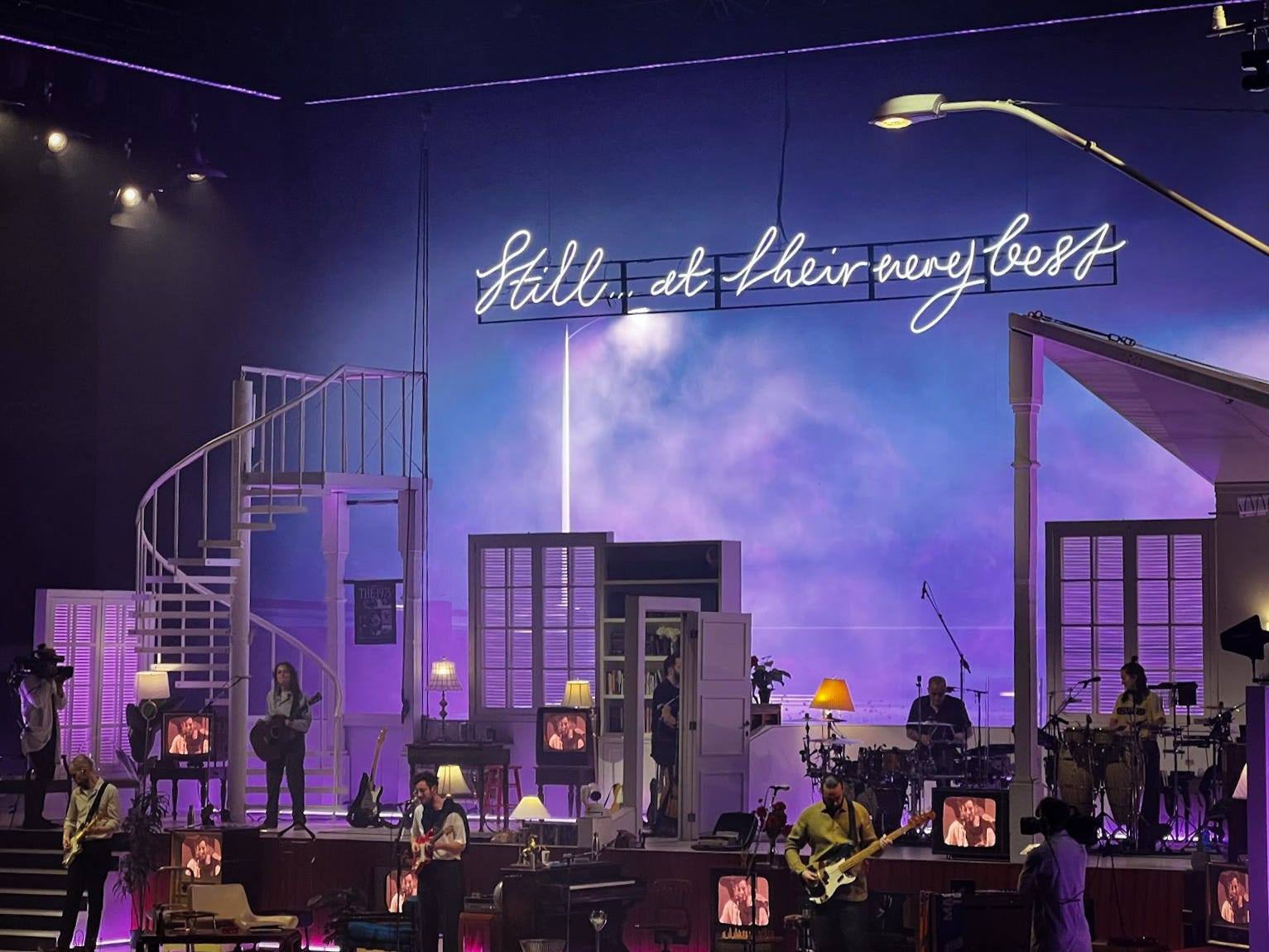
My reminiscing and lamenting of my current situation led me to consider how perhaps our constant presence on the internet is hindering our opportunities to experience art in a way that ‘touches the soul’, as I so poetically put it. Frequently in discussions about social media, the term ‘consumption’ is used to describe how we interact with auditory and visual information, and this vocabulary seems to overlap into discourse around art. ‘We create in the way we consume’ is a phrase Healy himself has used numerously, and while I agree with this statement, I also believe that the word consumption does not necessarily describe our entire relationship to art with perfect accuracy, and perhaps doesn’t do justice to those more palpable moments.
To me, the word consumption suggests two things: passivity and singularity. When food is described as being ‘consumed’, it is often in a more scientific context and its clinical tone lacks any connotation of emotional engagement. You would never read an article on fine dining and expect the experience to be reduced to what the writer had ‘consumed’. Additionally, the word consumption implies an inherently singular process and does not capture the joy of dining with friends and family, the conversation that is shared over a meal, or the buzzing atmosphere in a restaurant. Similarly, when we talk about the consumption of online content, it comes with the implication that we do so both passively and individually, and this implication seems to be carried over when talking about art.
As mentioned in the previous section, the line between content and art is becoming increasingly blurred, in part due to the flatness of the smartphone’s interface. The space in which we consume trivial ten second clips has the same lack of dimension as that in which we listen to the length of an album. Comparatively, when we go to a concert, visit an art gallery, or watch a show in the theatre, our physical presence and relinquishment of control forces a level of engagement that is far more likely to elicit emotion in a way that honours art’s truest intentions.
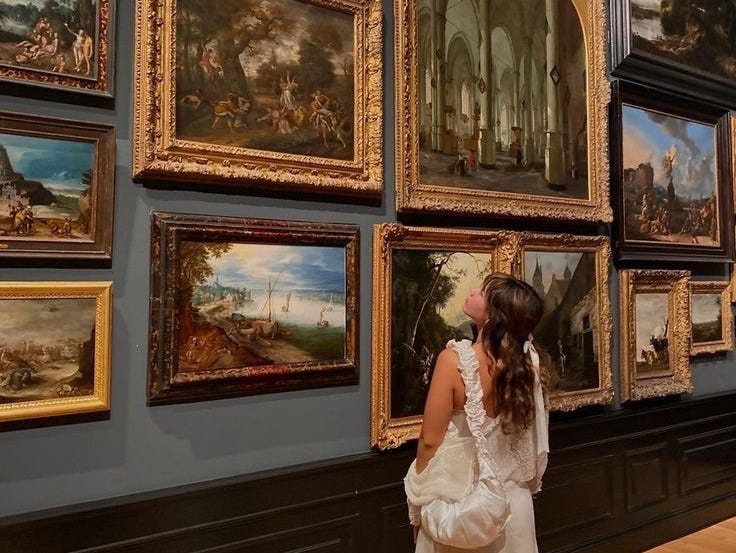
It can perhaps be considered then that the distinction between the consumption and experience of art can be determined in part by the extent to which the context is individual or collective. When we are surrounded by others, or even just in the company of one other, our attention is brought away from ourselves and shifts from introspection to extrospection. In the presence of others, our awareness of our own existence is heightened, and so in the presence of others when in the presence of art, our connection to said art is strengthened, as we more consciously recognise ourselves in relation to the artist, our fellow audience members, and the physical space in which the experience occurs. It feels as though the burgeoning individualisation of our interactions with media in all forms, and the merging sectors of the art/content venn diagram, are diminishing the emotional resonance of our relationships with art and each other.
This year, I was not fortunate enough to attend Glastonbury and watch The 1975 realise their career-long dream of headlining the Pyramid Stage. I did however have the privilege of watching the moment unfold on a large television screen with great speakers and my best friend and equally fanatic fan by my side. I would personally argue that her presence in my living room made the whole thing more of an experience, and to her I am grateful, but the translation of a moment through modern technology still does not and will never do justice to the soul-touching feeling of actually being there. I hope that sometime in the not-too-distant future I will be able to actually be there.
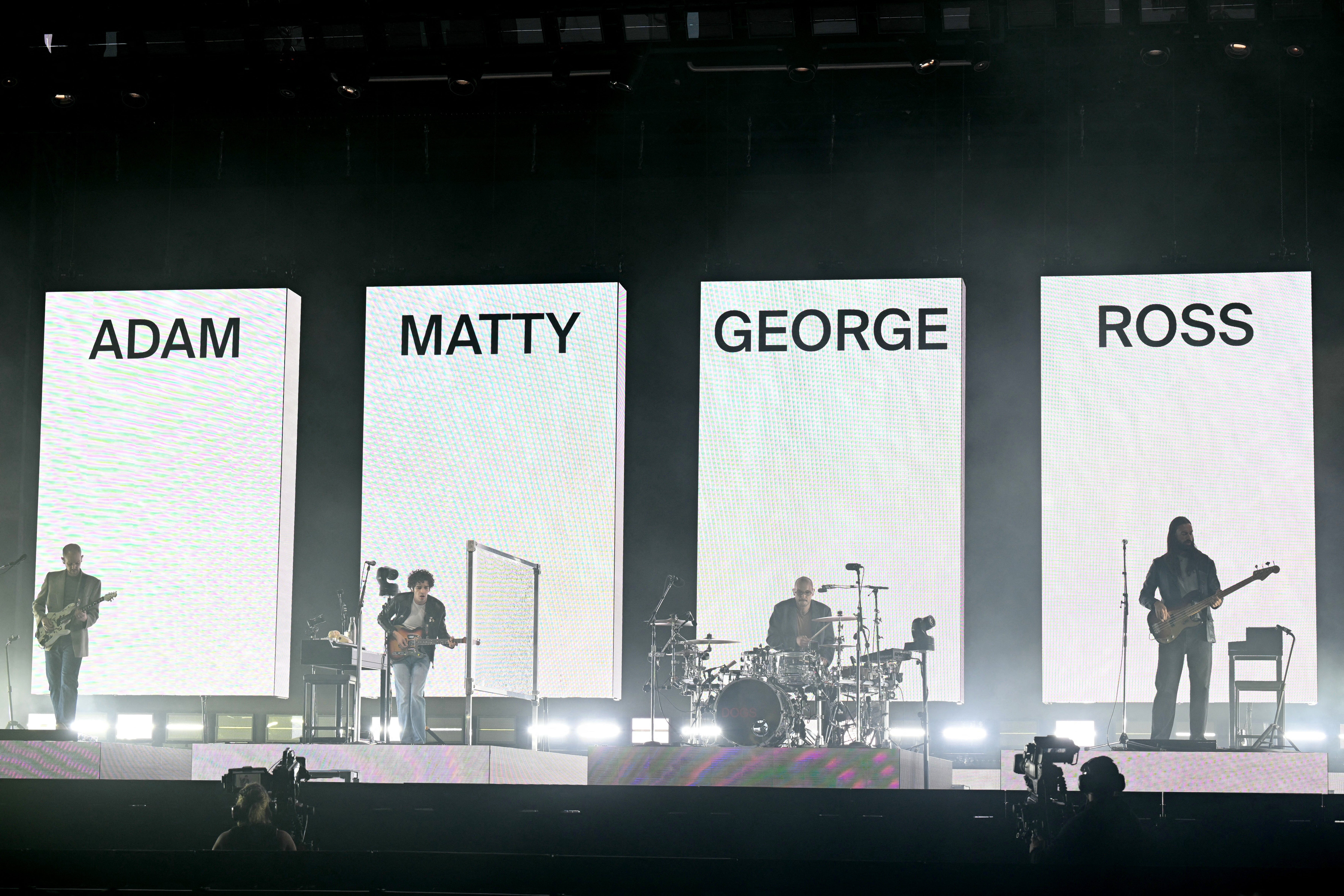
When a chronic illness keeps you mostly housebound, it becomes increasingly difficult to experience art in a way that makes you feel connected to others, and to avoid falling into a pit of consumption. But my longing and resolution to be back in the real world is only strengthened by the promise that there is an abundance of art out there, waiting for me to experience it. I want to walk through a gallery and brush shoulders with others who stand in awe of a landscape, or intrigue at an abstract sculpture. I want to sit in an old theatre and let beautiful dialogue wash through me. I want to laugh and clap in unison. I want to feel the thrill of the lights going down as the band comes on and the buzzing of the crowd in the liminal moment before the music starts. I want to hear “Robbers” live.
amazing essay! i think art is fundamentally a meeting point of two experiences, artist and viewer. that’s what makes it so personal; each individual engagement with a piece brings a new perspective and, therefore, creates a new singular and personal representation of the art. but that can only happen if we take the time to engage with it! the internet has made it so we are all constantly creating and consuming, performing for each other and ourselves, and no one has the will to truly invest their attention outwards. we’re just letting the content wash over us without any reciprocity. you’re right, we need to stop consuming and start engaging!
Hi, I just want you to know that even though I've read this before, I find myself coming back to it because it stuck with me. As a 1975 fan whose been around since the beginning and has felt all the things you said here, it resonated so much for me. I've often felt alienated at times with how the mainstream music industry has become increasingly soulless and people who create music gravitate more towards what's popular and profitable rather than what moves them. To have a band like the 1975, as divisive as they may be, that doesn't adhere to what the industry deems popular or profitable means so much. Having fellow fans who just get it means so much. I haven't had the chance to do so yet but you writing this has inspired me to share my own experience with how the 1975 has had such a profound impact on how I view art and music.